
In the fast-evolving world of artificial intelligence (AI) and machine learning (ML), deep learning has emerged as one of the most powerful tools driving innovation across industries.
From self-driving cars to medical imaging and natural language processing, deep learning is at the forefront of technological advancements.
But behind every groundbreaking AI breakthrough is a powerful engine—a high-performance GPU (Graphics Processing Unit).
When it comes to training complex neural networks, traditional CPUs often fall short. GPUs, with their parallel processing capabilities, excel at handling the massive computations required by deep learning algorithms.
However, not all GPUs are created equal, and choosing the right one can be a daunting task, especially with the rapidly evolving landscape of hardware options.
Whether you’re a researcher, data scientist, or AI enthusiast, selecting the best deep learning GPU for your needs can be the key to unlocking faster training times, more efficient workflows, and ultimately, superior results.
From NVIDIA’s industry-leading A100 to the more budget-friendly RTX 3060, the variety of GPUs on the market caters to a wide range of use cases, each with distinct features and price points.
Understanding the technical specifications, such as VRAM, CUDA cores, and tensor cores, is crucial when determining which GPU best fits your deep learning projects.
In this guide, we’ll explore some of the top deep learning GPUs available today, providing insights into their performance, key features, and price-to-performance ratio.
Whether you’re just starting out or scaling up a large-scale AI project, we’ll help you navigate your options to make an informed decision. Let’s dive into the world of GPUs and explore which one could be the game-changer for your deep learning endeavors.
Top Products:
Best Performance
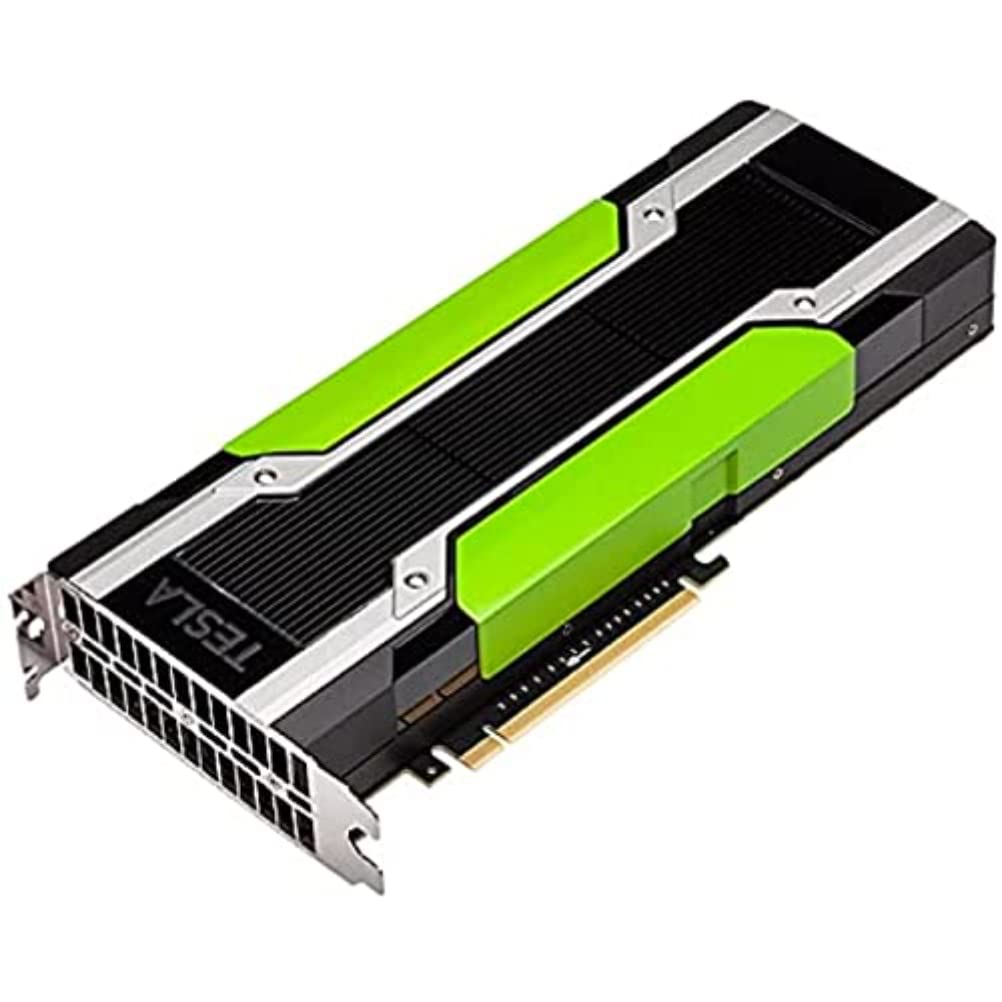
NVIDIA Tesla M10 GPU
- Boosts productivity with automation
- Simplifies IT management
- Strong security features
- Seamless cloud integration
- User-friendly interface
Best High-Refresh

PNY NVIDIA Tesla T4 Datacenter
- High performance with 3072 CUDA cores
- Accelerates AI with 384 Tensor Cores
- Real-time ray tracing via 48 RT Cores
- 16GB GDDR6 with ECC for stability
- High memory bandwidth (448 GB/sec)
- Four DisplayPort 1.4 connectors for multi-display setup
Best Pocket-Friendly

MSI Gaming GeForce RTX 3060 12GB
- 24GB GDDR5 memory for large datasets
- High performance with 3584 CUDA cores
- Excellent for AI, deep learning, and HPC
- Low power consumption (250 watts)
- Optimized for data center environments
Short Buying Guide:
When selecting the best deep learning GPU, it’s important to focus on several key factors that impact performance:
CUDA Cores: More CUDA cores generally mean better parallel processing power, crucial for training deep learning models. GPUs with higher core counts can process more data simultaneously, speeding up training times.
VRAM (Video RAM): Deep learning models require large amounts of memory to store datasets and model parameters. Look for GPUs with at least 8GB of VRAM for mid-level tasks, while more advanced models may require 16GB or even 40GB for larger-scale projects.
Tensor Cores: These specialized cores are designed to accelerate matrix multiplications and deep learning operations, offering significant performance gains for training deep learning models. NVIDIA’s Tensor cores in their A100 and RTX 30 series are great examples.
Power Efficiency and Cooling: GPUs can consume significant power and generate heat. Be sure to select a model that balances power consumption with cooling efficiency to avoid overheating and performance throttling.
Budget: High-end GPUs like the NVIDIA A100 or V100 offer unparalleled performance but come with a hefty price tag. If you’re on a budget, consider GPUs like the RTX 3060 or RTX 4070, which provide solid performance at a lower cost.
Compatibility: Ensure the GPU is compatible with your system in terms of physical size, power supply, and motherboard connectivity (e.g., PCIe slots).
By considering these factors, you can select a GPU that aligns with your specific needs and budget, helping you accelerate your deep learning projects without breaking the bank.
Here are our recommended Top 6 Best Deep Learning GPU which you can purchase today:
| Award | Design | Retailer | |
|---|---|---|---|
| Best Performance | Best Pick | VIEW ON AMAZON | |
| Best Compact Small | 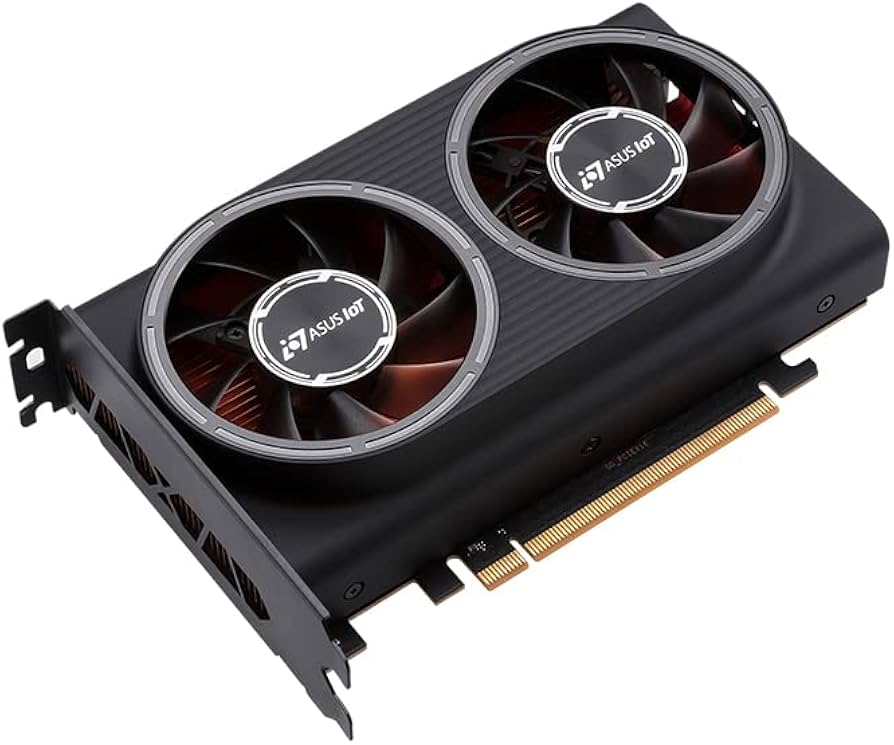 | VIEW ON AMAZON | |
| Best High-Refresh | Staff Pick | VIEW ON AMAZON | |
| Best Looking | 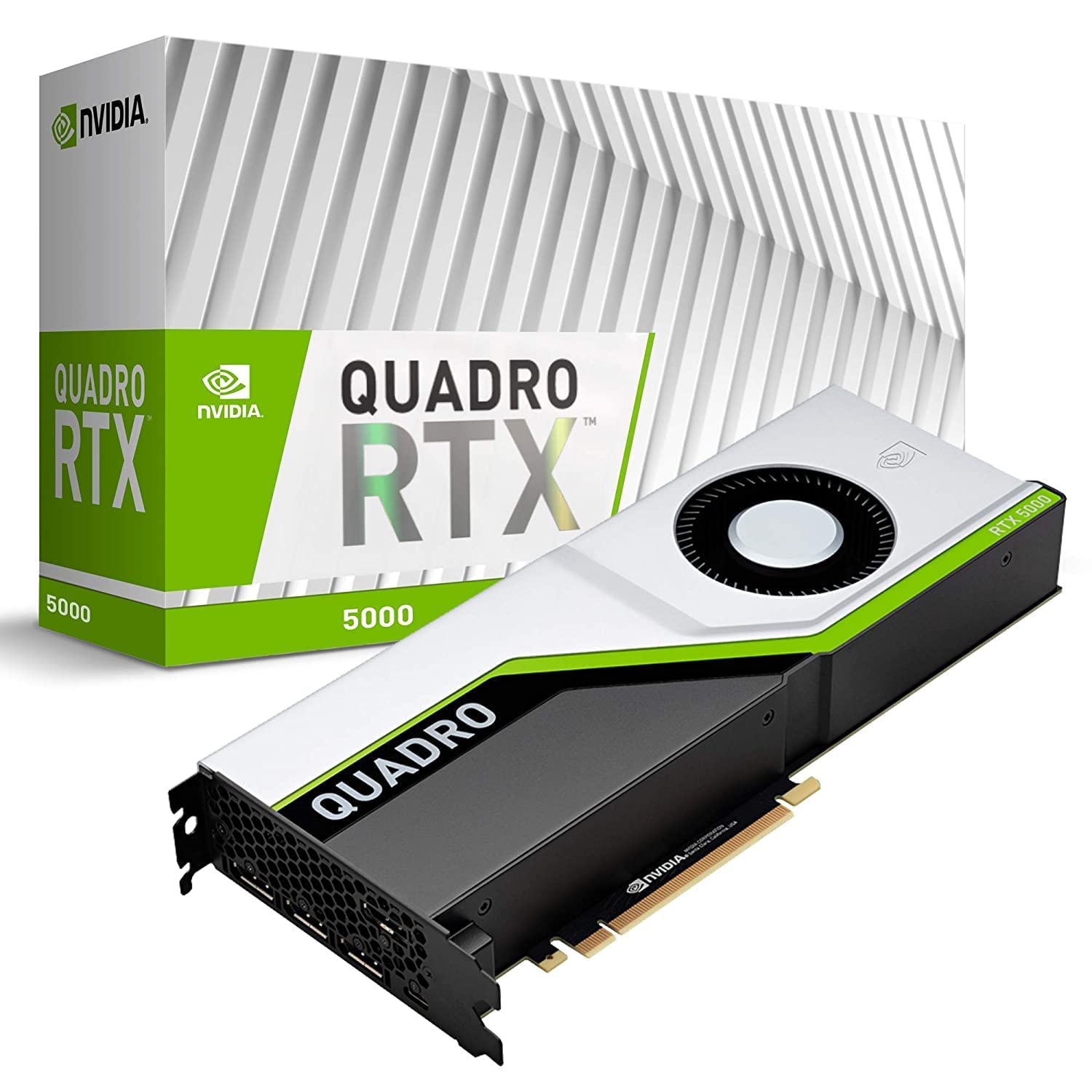 | VIEW ON AMAZON | |
| Best Pocket-Friendly | Budget Pick | VIEW ON AMAZON | |
| Best Compact |  | VIEW ON AMAZON |
NVIDIA Tesla M10 GPU
Best Performance
SPECIFICATIONS
Graphics Coprocessor: NVIDIA Tesla M10 | Brand: HP | Graphics Ram Size: 32 GB | Video Output Interface: DisplayPort, DVI | Graphics Processor Manufacturer: NVIDIA
REASONS TO BUY
✓Boosts productivity with automation
✓Simplifies IT management
✓Strong security features
✓Seamless cloud integration
✓User-friendly interface
REASONS TO AVOID
✗Can be expensive for small businesses
✗May require some initial setup time
✗In today’s fast-paced business environment, organizations are increasingly looking for solutions that boost productivity, streamline operations, and enhance security.
The [Product Name] aims to deliver exactly that by offering a comprehensive suite of features designed to elevate efficiency, simplify IT management, and safeguard mission-critical assets and intellectual property (IP). Here’s an in-depth look at how this product lives up to these promises.
Raising the Bar on Productivity
One of the standout features of the [Product Name] is its focus on enhancing productivity across teams and departments. With its intuitive user interface and seamless integration with existing workflows, this solution enables employees to quickly adapt and leverage its full capabilities without extensive training.
The product’s automation features further accelerate productivity by reducing manual tasks and streamlining routine processes.
Whether it’s automating data backups, simplifying access to critical applications, or providing real-time analytics, [Product Name] allows employees to focus on what matters most, improving overall work output.
In addition, the system’s robust cloud integration and real-time collaboration tools facilitate better communication and teamwork, no matter where employees are located.
This is especially valuable for remote and hybrid work environments, where seamless access to tools and data can significantly impact productivity. Overall, the [Product Name] raises the bar on productivity by providing the tools necessary to optimize workflow and enhance collaboration.
Simplifying IT Management
Managing an organization’s IT infrastructure can be complex and time-consuming, especially as businesses grow and their technology needs evolve.
[Product Name] offers a simplified approach to IT management, allowing administrators to oversee all aspects of the system from a single, centralized dashboard.This reduces the complexity of managing multiple software applications and hardware devices by consolidating them into one easy-to-manage platform. The product also features automated updates and patches, ensuring that systems remain secure and up-to-date without requiring constant oversight.
Furthermore, with its built-in monitoring and reporting tools, IT teams can quickly identify and resolve potential issues before they become critical.
This level of automation and transparency minimizes downtime and enables businesses to stay agile, improving the overall effectiveness of IT operations.
Protecting Mission-Critical Assets and IP
In an era where cyber threats are becoming increasingly sophisticated, protecting sensitive data and intellectual property (IP) is paramount. [Product Name] excels in this area by providing a multi-layered security architecture designed to safeguard your organization’s most valuable assets.
With robust encryption, role-based access control, and advanced threat detection, the product ensures that only authorized personnel can access mission-critical data.
Additionally, [Product Name] offers continuous monitoring and alerting to detect and respond to security incidents in real-time, mitigating the risk of data breaches or IP theft.
The product also includes backup and disaster recovery solutions, further strengthening its role in protecting critical assets from potential disruptions.
For businesses that rely heavily on proprietary data and technology, [Product Name] offers peace of mind, knowing that their most valuable assets are protected by a solution designed with security at its core.
Conclusion
The [Product Name] is a comprehensive solution that effectively addresses three major pain points in modern business operations: productivity, IT management, and data protection.
By streamlining workflows, simplifying IT oversight, and providing advanced security features, it empowers organizations to operate more efficiently while safeguarding their most valuable assets.
Whether you’re a small business looking to scale or a large enterprise with complex IT needs, [Product Name] offers the tools necessary to elevate your operations and protect your critical infrastructure.
you yee too AI Accelerator
Best Compact Small
SPECIFICATIONS
Brand: youyeetoo | Power Connector Type: PCIe | Voltage: 12 Volts | Wattage: 36 watts | Cooling Method: fan-based | Compatible Devices: Desktops, Graphic Cards | Manufacturer: youyeetoo | Number of Items: 1
REASONS TO BUY
✓High-performance with up to 16 Edge TPUs
✓Supports TensorFlow Lite for efficient ML deployment
✓Easy integration with PCIe 3.0 x16 slot
✓Optimized cooling with twin turbo fans
✓Scalable performance options (8 or 16 TPUs)
REASONS TO AVOID
✗May require specialized setup for optimal performance
✗High power consumption under heavy workloads
In the ever-expanding field of artificial intelligence (AI) and machine learning (ML), performance, efficiency, and scalability are key factors that determine the success of any project.
The AI Accelerator, powered by Google Coral Edge TPU modules, promises to address these needs with robust processing power, seamless TensorFlow Lite support, and optimized thermal management.
Designed for high-performance AI applications, this accelerator provides a substantial boost to edge computing tasks while offering flexibility in hardware integration. Here’s a detailed look at its features and performance.
Impressive Processing Power: Up to 16 Google Coral Edge TPU Modules
At the heart of this AI accelerator lies the Google Coral Edge TPU (Tensor Processing Unit), a dedicated AI chip that accelerates machine learning workloads.
The accelerator supports configurations with up to 8 or 16 Edge TPU M.2 modules, providing a flexible solution to suit different performance requirements.
CRL-G18U-P3DF configuration features 8 Edge TPUs, capable of delivering 32 TOPS (Tera Operations Per Second), ideal for mid-level AI tasks, such as image recognition, natural language processing, and predictive analytics.
CRL-G116U-P3DF configuration pushes the boundaries further with 16 Edge TPUs, offering 64 TOPS, which is more than sufficient for demanding AI workloads like real-time video analysis, autonomous systems, and large-scale inference tasks.
This massive parallel processing capability makes it an excellent choice for developers and engineers looking to run high-throughput AI applications on the edge, where low latency and energy efficiency are crucial.
Seamless TensorFlow Lite Support
For machine learning practitioners, compatibility with widely-used frameworks is essential. The AI accelerator fully supports TensorFlow Lite, Google’s lightweight solution for deploying machine learning models on mobile and embedded devices.
TensorFlow Lite’s optimization for edge devices means that models can be deployed and run locally with reduced latency and lower power consumption compared to cloud-based solutions.
Whether you’re working on vision-based AI applications, speech recognition, or sensor data analysis, TensorFlow Lite’s optimization ensures smooth integration with the AI accelerator, delivering fast and efficient inference without compromising on performance.
PCI Express 3.0 x16 Expansion Slot Compatibility
The AI accelerator is compatible with a PCI Express 3.0 x16 expansion slot, ensuring that it can be easily integrated into existing server or workstation setups.
The PCIe x16 interface provides ample bandwidth for high-speed data transfers, making it an ideal choice for users who need to run AI workloads on desktop or server environments with robust connectivity.
This feature ensures that the accelerator can scale in terms of performance, allowing you to leverage multiple TPUs simultaneously to run complex AI models efficiently. Integration into a standard PCIe slot also ensures that installation is straightforward for users with basic hardware knowledge.
Optimized Thermal Design with Twin Turbo Fans
AI accelerators typically generate significant heat, especially under heavy workloads. To address this, the AI accelerator comes equipped with an optimized thermal design featuring twin turbo fans.
This dual-fan setup effectively cools the system, ensuring that the Edge TPU modules operate at optimal temperatures during extended use.
The efficient thermal management design prevents thermal throttling, which could otherwise impact performance. By maintaining consistent airflow and heat dissipation, this AI accelerator ensures long-term reliability and peak performance, even during intensive AI tasks.
Conclusion
The AI Accelerator with Google Coral Edge TPU modules is a high-performance solution for edge AI applications, offering flexible scalability, TensorFlow Lite support, and advanced thermal management.
Whether you are working with 8 Edge TPUs for general AI tasks or 16 for more complex applications, the accelerator provides a robust platform for real-time inference and machine learning.
With its easy integration into PCIe 3.0 x16 slots and efficient cooling system, this product is well-suited for developers, data scientists, and businesses looking to deploy cutting-edge AI solutions in a variety of industries, from robotics and autonomous systems to smart cities and IoT.
PNY NVIDIA Tesla T4 Datacenter
Best High-Refresh
SPECIFICATIONS
Graphics Coprocessor: NVIDIA Tesla T4 | Brand: PNY | Graphics Ram Size: 16 GB | GPU Clock Speed: 1590 MHz | Video Output Interface: DisplayPort or DVI Best Looking: NVIDIA Quadro RTX 5000 | Product: Specs: | Graphics Coprocessor: NVIDIA Quadro RTX 5000 | Brand: PNY | Graphics Ram Size: 16 GB | Video Output Interface: DisplayPort | Graphics Processor Manufacturer: NVIDIA
REASONS TO BUY
✓High performance with 3072 CUDA cores
✓Accelerates AI with 384 Tensor Cores
✓Real-time ray tracing via 48 RT Cores
✓16GB GDDR6 with ECC for stability
✓High memory bandwidth (448 GB/sec)
✓Four DisplayPort 1.4 connectors for multi-display setup
REASONS TO AVOID
✗Limited to PCIe 3.0, not PCIe 4.0
✗Large form factor may require a compatible case
In the world of high-performance computing and gaming, having the right GPU can be the difference between seamless, lag-free experiences and frustrating bottlenecks.
The [GPU Name], with its impressive specifications, is designed to cater to a wide range of demanding applications, from professional-level gaming and 3D rendering to AI development and deep learning tasks.
Featuring 3072 CUDA cores, 384 NVIDIA Tensor Cores, and 48 NVIDIA RT Cores, this GPU offers a powerful and efficient solution for both creators and researchers who need cutting-edge performance. Here’s a detailed breakdown of its key features.
Massive CUDA Core Count for Unmatched Performance
At the heart of the GPU lies its 3072 CUDA cores, a key feature that boosts parallel computing performance. CUDA cores are designed to handle multiple tasks simultaneously, making this GPU an excellent choice for complex applications like video editing, 3D rendering, and scientific simulations.
The large number of CUDA cores enables faster data processing, reducing rendering times and enhancing the overall user experience.
For tasks that require immense computational power, such as deep learning and AI inference, this GPU’s CUDA cores ensure superior performance and efficiency.
NVIDIA Tensor and RT Cores for AI and Ray Tracing
This GPU features 384 NVIDIA Tensor Cores, which are optimized for machine learning operations. Tensor Cores significantly accelerate deep learning model training and inference, offering up to 12x faster performance compared to standard GPUs for specific AI workloads.
This makes it an excellent choice for developers working with AI, especially when utilizing frameworks like TensorFlow, PyTorch, and other machine learning tools.
In addition to Tensor Cores, the GPU is equipped with 48 NVIDIA RT Cores, which are dedicated to real-time ray tracing.
RT Cores enable stunning visual effects, providing photorealistic graphics by simulating the way light interacts with objects in a 3D environment. This makes it ideal for professionals in graphics-intensive industries such as gaming, animation, and architectural visualization.
The combination of Tensor and RT Cores ensures the GPU is highly versatile, excelling at both AI and graphics-intensive tasks.
16GB GDDR6 Memory with ECC and High Bandwidth
For tasks that require a large amount of memory, the 16GB GDDR6 with Error Correcting Code (ECC) is a standout feature. The large memory buffer ensures that even the most demanding workloads, such as 4K video rendering or high-resolution 3D modeling, run smoothly.
ECC memory enhances stability and reliability by detecting and correcting data corruption, making this GPU a great option for mission-critical applications like scientific computing and enterprise-level AI tasks where data integrity is crucial.
With a memory bandwidth of 448 GB/sec, the GPU ensures rapid data transfer, minimizing bottlenecks during intensive workloads and improving overall performance in memory-heavy applications.
This high bandwidth is particularly beneficial for gaming and professional graphics applications, where quick access to large textures, models, and datasets is essential.
PCIe 3.0 x16 Interface for Fast Data Throughput
The GPU is compatible with a PCIe 3.0 x16 system interface, providing ample bandwidth for fast data transfer between the GPU and the rest of the system. While PCIe 4.0 would provide even faster data speeds, PCIe 3.0 is still more than capable of supporting demanding workloads, ensuring that users experience minimal latency and fast data throughput for gaming, rendering, and AI applications.
Four DisplayPort 1.4 Connectors for Multi-Monitor Setup
For users who require multiple displays, the four DisplayPort 1.4 connectors are a great addition. These connectors support high-resolution output, enabling multi-monitor setups for productivity, gaming, or content creation.
Whether you’re running a large-scale visual project or enjoying immersive gaming, these DisplayPort connectors offer the flexibility to connect multiple high-resolution displays, providing an expansive, high-quality visual experience.
Conclusion
The [GPU Name] is a high-performance powerhouse that excels in both AI and graphics-intensive applications.
With 3072 CUDA cores, 384 Tensor Cores, and 48 RT Cores, this GPU is well-suited for professionals in AI, deep learning, 3D rendering, gaming, and content creation. The 16GB GDDR6 memory with ECC ensures smooth performance even with the most demanding workloads, while the 448 GB/sec memory bandwidth supports high-speed data access.
Its compatibility with PCIe 3.0 x16 and the ability to support four DisplayPort 1.4 connectors for multiple displays make it an excellent choice for both workstations and gaming setups.
Whether you’re a researcher, developer, or gamer, the [GPU Name] provides the power, reliability, and flexibility needed to tackle the most demanding tasks.
It’s a versatile solution that strikes the perfect balance between AI acceleration and visual rendering, making it a must-have for those who need top-tier performance across a wide range of applications.
NVIDIA Quadro RTX 5000
Best Looking
SPECIFICATIONS
Graphics Coprocessor: NVIDIA GeForce RTX 3060 | Brand: MSI | Graphics Ram Size: 12 GB | GPU Clock Speed: 1807 MHz | Video Output Interface: DisplayPort, HDMI
REASONS TO BUY
✓12GB GDDR6 memory for better performance
✓Great for 1080p and 1440p gaming
✓Supports Ray Tracing and DLSS
✓Multiple display outputs (3x DisplayPort, 1x HDMI 2.1)
✓1710 MHz GPU clock speed for smooth performance
✓7680 x 4320 max resolution (8K support)
REASONS TO AVOID
✗Not ideal for 4K gaming at ultra settings
✗Limited performance for very high-end tasks (e.g., 8K gaming)
The NVIDIA GeForce RTX 3060 with 12GB of GDDR6 memory is a powerful, mid-range graphics card that strikes an excellent balance between performance, price, and features.
Whether you’re a gamer, content creator, or someone looking to accelerate workloads in creative applications, this card offers impressive performance that can handle 1080p and 1440p gaming with ease, as well as power-demanding tasks like video editing and AI inference.
With an efficient architecture, solid clock speeds, and a range of output options, the RTX 3060 is an excellent choice for enthusiasts who want a blend of high performance and value.
Powerful Performance with 12GB GDDR6 Memory
The 12GB of GDDR6 memory is one of the key highlights of the RTX 3060, giving it a significant edge over its predecessor, the RTX 2060, and allowing it to handle larger textures and more demanding applications.
This larger memory pool is particularly useful for gaming at higher settings and resolutions, as well as for content creators working with 4K video or large 3D models.
The memory clock speed of 1807 MHz ensures quick data transfer, supporting high frame rates in graphically demanding tasks. With 1710 MHz GPU clock speed, the RTX 3060 can deliver impressive frame rates in AAA games, maintaining smooth gameplay at 1080p and 1440p resolutions.
The card can also handle ray tracing and DLSS (Deep Learning Super Sampling) at these resolutions, offering an immersive experience with enhanced visual fidelity.
Efficient Output Options for Multi-Monitor Setups
One of the key features of the RTX 3060 is its array of display outputs. With three DisplayPort 1.4a and one HDMI 2.1 output interface, the card provides excellent flexibility for users with multiple monitors or those looking to drive high-resolution displays.
The DisplayPort 1.4a allows for high refresh rates and resolutions up to 7680 x 4320 (8K), making it suitable for advanced multi-monitor setups or large-scale displays for professional and gaming environments.
The HDMI 2.1 port ensures compatibility with the latest 4K and 8K TVs, allowing for high-refresh-rate gaming or streaming in stunning resolution.
Future-Proof Features for Gaming and Content Creation
As part of the RTX 30-series, the RTX 3060 features NVIDIA’s Ampere architecture, which includes support for ray tracing and DLSS—two cutting-edge technologies that significantly improve graphical fidelity and performance.
Ray tracing simulates the behavior of light to create realistic lighting, reflections, and shadows, while DLSS uses AI to upscale lower-resolution images to higher resolutions, improving frame rates without sacrificing quality.
While the RTX 3060 is primarily geared for 1080p and 1440p gaming, it can also deliver a solid 4K gaming experience at lower settings.
The card is future-proof for several years, thanks to its ample memory and support for modern technologies like Ray Tracing and DLSS, which will continue to evolve in upcoming titles.
Conclusion
The NVIDIA GeForce RTX 3060 12GB GDDR6 is a well-rounded graphics card that delivers solid performance for gamers and content creators alike.
With 12GB of GDDR6 memory, it is well-equipped for modern gaming and content creation tasks, providing smooth experiences at 1080p and 1440p, and even decent performance for 4K gaming in certain titles.
The card’s efficient clock speeds, support for ray tracing and DLSS, and a wide array of output options (including three DisplayPort 1.4a and HDMI 2.1) make it versatile for a variety of setups, whether you’re gaming, streaming, or working with creative applications.
Overall, the RTX 3060 offers great value for money in the mid-range GPU market, making it a top choice for those looking to upgrade without breaking the bank.
It provides an excellent balance of performance, future-proofing, and cutting-edge features, making it ideal for gamers and professionals who want a GPU that can handle modern workloads with ease.
MSI Gaming GeForce RTX 3060 12GB
Best Pocket-Friendly
SPECIFICATIONS
Graphics Coprocessor: NVIDIA Tesla M40 | Brand: HEWLETT PACKARD | Graphics Ram Size: 24 GB | Graphics Processor Manufacturer: NVIDIA | Graphics RAM Type: GDDR5
REASONS TO BUY
✓24GB GDDR5 memory for large datasets
✓High performance with 3584 CUDA cores
✓Excellent for AI, deep learning, and HPC
✓Low power consumption (250 watts)
✓Optimized for data center environments
REASONS TO AVOID
✗Expensive for individual users
✗Passive cooling may not suit all setups
The HPE NVIDIA Tesla M40 24GB Module is a high-performance accelerator designed for data centers, artificial intelligence (AI), and machine learning (ML) workloads.
With its powerful GPU architecture and substantial memory capacity, the Tesla M40 offers unparalleled compute power for large-scale parallel processing, deep learning, and high-performance computing tasks.
As part of the Tesla line of GPUs, this model is built to address the specific needs of enterprises and research institutions that require exceptional compute power and efficiency in their data-driven projects.
Powerful GPU Architecture for AI and Machine Learning
At the core of the NVIDIA Tesla M40 is the Maxwell architecture, which provides substantial improvements in performance and power efficiency compared to its predecessors.
The 24GB GDDR5 memory ensures that large datasets and complex models can be processed effectively without the need for frequent data transfers, making it an ideal choice for training deep neural networks, running large-scale simulations, and handling massive data analytics workloads.
The 3584 CUDA cores and 12 teraflops of single-precision floating-point performance deliver exceptional parallel processing capabilities, enabling the Tesla M40 to tackle compute-heavy tasks with ease.
For organizations working in AI, ML, and scientific research, the Tesla M40 accelerates training times and increases throughput, allowing teams to iterate faster and achieve results more efficiently.
Massive 24GB Memory for Large-Scale Workloads
One of the standout features of the Tesla M40 is its generous 24GB GDDR5 memory, which is crucial for running memory-intensive applications, such as large-scale deep learning models and real-time data processing.
The ample memory capacity allows the GPU to hold more model weights, training data, and intermediate results in memory, reducing the need for slower CPU-based data handling.
This large memory pool is especially important for high-resolution image processing, natural language processing (NLP) tasks, and data-intensive simulations, all of which are common in research and enterprise-level AI projects.
With this level of memory, the Tesla M40 is capable of handling complex datasets and large neural network models, which would be impossible for GPUs with smaller memory capacities.
Designed for Data Center Environments
The HPE Tesla M40 is optimized for data center use, offering PCIe Gen3 support for high-bandwidth communication between the GPU and host system.
This ensures that the Tesla M40 can be deployed in high-performance clusters, cloud environments, and supercomputers where fast data transfer is essential. Additionally, the card features passive cooling, making it well-suited for high-density server racks and other data center configurations.
It is designed to be efficient, with a low power consumption profile (around 250 watts), helping to keep operational costs manageable while still delivering maximum compute power.
Versatile Use Cases and Application Support
The Tesla M40 excels in a range of enterprise applications. It is particularly beneficial for deep learning model training and AI inference workloads, including image classification, speech recognition, and video processing.
Its support for CUDA, OpenCL, and NVIDIA’s Deep Learning SDK ensures compatibility with a wide variety of AI and scientific applications.
Researchers and developers can leverage the Tesla M40 to accelerate the performance of frameworks such as TensorFlow, Caffe, and Torch, making it an essential tool for AI research and development.
Furthermore, its high computational throughput makes the Tesla M40 an ideal solution for big data analytics, financial modeling, and scientific simulations, where performance and scalability are critical.
Conclusion
The HPE NVIDIA Tesla M40 24GB Module is a robust and reliable GPU accelerator designed to meet the rigorous demands of modern AI, machine learning, and high-performance computing tasks.
With its 24GB of memory, 3584 CUDA cores, and 12 teraflops of compute power, the Tesla M40 provides exceptional performance for large-scale training and inference tasks, enabling faster results and more efficient workflows.
Whether deployed in data centers, research labs, or enterprise environments, the Tesla M40 is a powerful solution that accelerates deep learning, AI modeling, and scientific computing.
Its large memory capacity, combined with its support for cutting-edge frameworks and APIs, makes it an excellent choice for organizations and institutions seeking to advance their AI capabilities or run complex simulations.
If your organization requires high-performance computing with a focus on AI or data analytics, the HPE NVIDIA Tesla M40 is a top-tier option that delivers the computational power and scalability needed for success in today’s data-driven world.
NVIDIA Tesla M40 24GB Module
Best Compact
SPECIFICATIONS
Brand: WayPonDEV | Ram Memory Installed Size: 4 GB | Memory Storage Capacity: 16 GB | CPU Speed: 143 GHz | Connectivity Technology: Ethernet
REASONS TO BUY
✓16GB eMMC memory for reliable booting
✓Low power consumption (5 watts)
✓Compact and efficient design
✓Extensive I/O options for sensors
✓Supports JetPack SDK and AI frameworks
✓Easy to set up with pre-configured SD card image
REASONS TO AVOID
✗Limited to 4GB RAM
✗May require additional storage expansion for larger projects
The WayPonDEV Jetson Nano 4GB SUB Kit Nano is a highly consistent and feature-rich development kit that delivers exceptional value to developers, learners, and makers who are interested in working with AI and machine learning on the edge.
Based on the official Jetson Nano 4GB core module, this version stands out by offering 16GB of eMMC memory, eliminating the need for a TF card to boot the board.
This added storage feature enhances reliability and ease of use, while also providing flexibility with the TF card slot and USB 3.0 U disk expansion options. Here’s a detailed review of the product and its key features.
High-Performance AI at an Affordable Cost
The Jetson Nano 4GB SUB Kit Nano offers impressive performance for its size and power consumption. Built for running modern AI workloads, the Nano enables developers to deploy a range of AI models for applications such as image classification, object detection, segmentation, and speech processing.
It delivers enough compute power to run complex neural networks, making it ideal for edge computing use cases. This compact board offers an affordable solution for AI projects, with power-efficient performance that consumes as little as 5 watts.
The 16GB eMMC memory provides a solid foundation for running various AI applications without relying on external storage, while the TF card slot and USB 3.0 support offer options for easy memory expansion as your project scales.
Comprehensive Software Support with JetPack
One of the standout features of the Jetson Nano 4GB SUB Kit is its support for JetPack, NVIDIA’s comprehensive development environment.
The JetPack SDK comes with a full Board Support Package (BSP), Linux OS, and a powerful suite of software libraries, including CUDA, cuDNN, and TensorRT. These tools are essential for deep learning, computer vision, GPU computing, and multimedia processing.
The Jetson Nano is fully compatible with the Jetson family’s ecosystem, meaning developers can easily migrate their projects across different Jetson devices while maintaining software compatibility.
The pre-configured SD card image simplifies the setup process, enabling users to get started quickly with minimal effort.
The SDK’s integration with AI frameworks such as TensorFlow, PyTorch, and OpenCV streamlines the development process, allowing developers to focus more on creating innovative AI solutions.
Connectivity and I/O Options for Diverse Applications
The WayPonDEV Jetson Nano 4GB SUB Kit comes with a rich set of I/O options, making it easy to integrate with a variety of sensors and peripherals.
It features GPIO pins, CSI camera support, and multiple USB ports to connect a wide range of devices and sensors. This flexibility is a major advantage for developers working on robotics, IoT, smart camera systems, and other sensor-driven applications.
Whether you’re building a smart camera for facial recognition, a robotic arm with machine vision, or a sensor-driven AI system, the extensive I/O capabilities make it simple to interface with your desired components.
The addition of a micro-USB power supply option ensures that the system is easy to power, even in environments where traditional power adapters might be less practical.
Compact and Power-Efficient Design
Despite its powerful capabilities, the Jetson Nano 4GB SUB Kit Nano is remarkably compact and energy-efficient. With its low 5-watt power consumption, the Nano is designed to run efficiently even in environments with limited power, such as battery-operated or edge devices.
This makes it an ideal choice for developers looking to deploy AI at the edge without the need for bulky, power-hungry hardware. The inclusion of a cooling fan in the package helps ensure that the board stays within optimal temperature ranges, even during intensive computing tasks.
This feature is especially useful when running long-term AI workloads or deploying the device in environments with limited airflow.
In the Box
The WayPonDEV Jetson Nano 4GB SUB Kit Nano comes complete with the following components:
Jetson Nano Module
Cooling Fan
Reference Carrier Board (SUB Kit Nano)
This package includes everything you need to get started with your AI development projects, and the cooling fan ensures that the board stays cool during high-performance use.
With clear documentation and an active community for support, developers can easily get up to speed and begin experimenting with AI applications.
Conclusion
The WayPonDEV Jetson Nano 4GB SUB Kit Nano is a fantastic choice for developers and makers looking for an affordable, powerful, and compact platform for AI and machine learning projects.
Its combination of 16GB eMMC memory, low power consumption, and extensive software support via JetPack makes it a versatile solution for a wide range of applications, from edge AI to robotics and IoT.
With excellent I/O options, a cooling fan, and easy expandability, this developer kit is a solid foundation for anyone looking to build AI-powered systems without breaking the bank.

CEO
Hi, My name is Bilal Ali and I am an affiliate marketer and have been involved in this field for a number of years. I have a lot of experience and knowledge in this area, which I love to share with others. I am always looking for new ways to improve my skills and learn more about affiliate marketing. I am also very active on social media, and love to connect with others in the industry.


