
In today’s world of high-definition streaming, Plex has become a household name, revolutionizing how we organize and consume media. Whether you’re a casual viewer or a hardcore cinephile, Plex offers a smooth, organized experience that puts all your movies, TV shows, and music at your fingertips.
However, to truly elevate your Plex server’s performance and unlock its full potential, particularly when it comes to transcoding media for streaming, choosing the right GPU for Plex transcoding is crucial.
Transcoding is the process of converting media files into a format that’s compatible with your device’s specifications.
When Plex transcodes content, it converts high-resolution files to lower bitrates for smoother playback on various devices.
This is where the GPU comes in—unlike CPUs, which are often slower at handling transcoding tasks, GPUs are specifically designed for parallel processing, meaning they can handle multiple streams of high-definition video at once, delivering faster and more efficient transcoding.
Selecting the best GPU for Plex transcoding isn’t just about raw power—it’s about finding the right balance between performance, cost, and compatibility with Plex’s hardware acceleration.
Whether you’re managing a large library with multiple concurrent streams or simply want to ensure that your Plex server is always ready for whatever media demands come its way, a capable GPU can make all the difference in providing a lag-free, high-quality viewing experience.
In this guide, we’ll take a look at the top GPUs for Plex transcoding, highlighting key features, benefits, and what to consider when making your decision.
If you’re serious about streaming, upgrading your Plex server with the right GPU is one of the best ways to ensure flawless performance, even with 4K content or multiple simultaneous streams.
Top Products:
Best Premium

ZOTAC Gaming GeForce RTX 3060 Twin
- Compact size – Fits in most systems
- 1080p gaming at 60 FPS – Smooth performance for most titles
- Turing architecture – Efficient and powerful
- Multiple display outputs – Supports 4K and HDR
- Affordable – Great value for budget gaming
Best High-End

ASUS Dual NVIDIA GeForce RTX 3050 OC
- 12GB GDDR6 memory – Ample VRAM for demanding tasks
- High clock speeds – Fast performance for gaming and content creation
- Supports 4K/8K resolution – Great for high-resolution displays
- Ray tracing and DLSS – Enhanced visuals and performance
- Multiple display outputs – Versatile connectivity options
Short Buying Guide
When shopping for a GPU specifically for Plex transcoding, here are the most important factors to consider:
Plex Hardware Acceleration Support
Plex supports hardware acceleration through both NVIDIA and Intel GPUs, as well as AMD to a lesser extent.
Make sure the GPU you choose is compatible with Plex’s hardware transcoding, as this will significantly reduce CPU usage and improve transcoding speed.
CUDA Cores vs. Video Decode/Encode Capabilities
NVIDIA GPUs use CUDA cores for general processing, but for transcoding, you want a GPU that supports the NVENC (NVIDIA Encoder) and NVDEC (NVIDIA Decoder) hardware. These technologies optimize the video encode and decode processes, allowing Plex to transcode multiple streams smoothly.
Number of Concurrent Streams
The more powerful the GPU, the more concurrent streams it can handle. If you plan to stream to multiple devices at once or use Plex in a household with a lot of users, look for GPUs that can handle multiple transcoding tasks without sacrificing performance.
Video Output and Media Compatibility
If you plan on using your Plex server for both transcoding and direct video output (e.g., for a home theater setup), check that the GPU supports the necessary video outputs (HDMI, DisplayPort) and is compatible with your media formats.
Price vs. Performance
GPUs can range widely in price, so balance your budget with your transcoding needs. For moderate use with 1080p content, a mid-range GPU may suffice. However, for 4K transcoding or a large number of streams, investing in a higher-end model will ensure you get smooth performance.
Future-Proofing
As media quality continues to evolve (think 8K, HDR), choosing a slightly more powerful GPU than you need today will help ensure that your server can handle future demands without needing an upgrade too soon.
Choosing the right GPU is the key to unlocking the full potential of your Plex server. Consider your specific needs, and ensure that your GPU will give you the power to stream all your media seamlessly, no matter the resolution or number of streams.
Here are our recommended Top 4 Best GPU for Plex Transcoding which you can purchase today:
| Award | Design | Retailer | |
|---|---|---|---|
| Best Premium | Best Pick | VIEW ON AMAZON | |
| Best All Rounder | 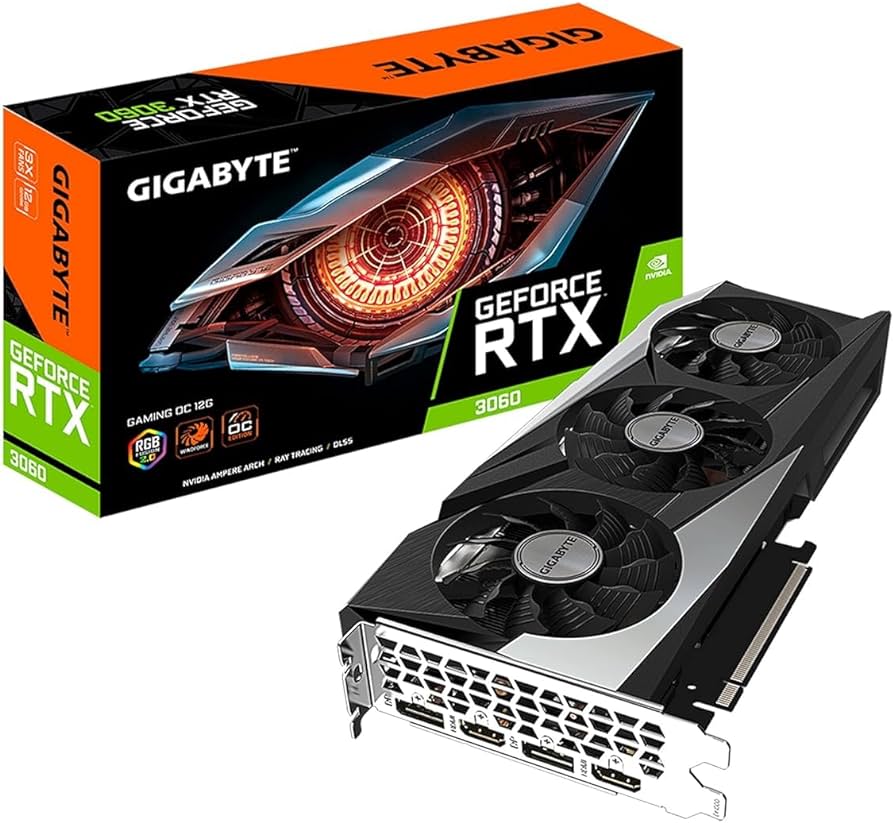 | VIEW ON AMAZON | |
| Best Performance |  | VIEW ON AMAZON | |
| Best High-End | Staff Pick | VIEW ON AMAZON |
ZOTAC Gaming GeForce RTX 3060 Twin
Best Premium
SPECIFICATIONS
Graphics Coprocessor: NVIDIA GeForce GTX 1660 | Brand: ZOTAC | Graphics Ram Size: 6 GB | GPU Clock Speed: 1785 MHz | Video Output Interface: DisplayPort
REASONS TO BUY
✓Compact size – Fits in most systems
✓1080p gaming at 60 FPS – Smooth performance for most titles
✓Turing architecture – Efficient and powerful
✓Multiple display outputs – Supports 4K and HDR
✓Affordable – Great value for budget gaming
REASONS TO AVOID
✗Limited 4K gaming – Not ideal for ultra settings
✗No hardware ray tracing – Lacks high-end RTX features
The NVIDIA GeForce GTX 1650 SUPER is a graphics card designed to deliver impressive gaming performance in a small form factor. Based on the Turing architecture, this budget-friendly GPU provides an excellent balance of performance, power efficiency, and versatility.
Whether you’re gaming at 1080p, diving into VR experiences, or enjoying 4K HDR content, the GTX 1650 SUPER is an excellent option for gamers looking for high-quality visuals without breaking the bank.
New Turing Architecture – Efficiency Meets Performance
The GTX 1650 SUPER is powered by NVIDIA’s Turing architecture, which delivers a significant performance boost over its predecessor, the GTX 1650.
Turing’s advanced shaders and hardware-accelerated ray tracing (though limited on this card compared to high-end models) enhance graphical fidelity in supported games.
While ray tracing isn’t the main focus here, the architecture ensures more efficient rendering, smoother gameplay, and lower power consumption. It’s a great choice for users who want modern features at an affordable price.
1080p Gaming at 60 FPS – Play Classic and Modern Titles
One of the standout features of the GTX 1650 SUPER is its ability to run classic and modern games at 1080p with 60 FPS stability. This GPU performs exceptionally well on popular titles such as Fortnite, Minecraft, League of Legends, and Overwatch, offering fluid and responsive gaming experiences.
While it won’t handle 4K gaming at ultra settings, it’s an excellent choice for gamers who prefer smooth 1080p gameplay on a budget.
Whether you’re playing action-packed shooters or open-world RPGs, this card provides high performance at a competitive price point.
Compact and Compatible – A Perfect Fit for Most Systems
One of the most impressive aspects of the GTX 1650 SUPER is its compact size. Measuring just 8.5 inches in length, it can easily fit into most PC builds, making it ideal for compact gaming PCs, small form factor cases, or HTPC (Home Theater PC) setups.
The card’s dual-slot design offers more than enough cooling for its size, ensuring stable performance even during extended gaming sessions.
Its small footprint means that 99% of systems can accommodate it, which is a significant benefit for users looking to upgrade without worrying about space restrictions.
Connectivity and Multi-Monitor Support – Versatile Display Options
The GTX 1650 SUPER is equipped with three DisplayPort 1.4 outputs and one HDMI 2.0b port, allowing for a variety of display configurations.
Whether you’re using a single monitor, multi-monitor setup, or connecting to a 4K HDR TV, the card provides ample flexibility.
It also supports 4K output and is HDR ready, making it suitable for users who want to enjoy ultra-high-definition content or VR experiences. With these multiple ports, the GTX 1650 SUPER is future-proof enough for various display setups.
Boost Clock of 1785 MHz – A Small Card with Big Performance
With a boost clock speed of 1785 MHz, the GTX 1650 SUPER offers a significant performance increase over the base GTX 1650.
The higher clock speeds, coupled with Turing architecture’s efficiency, help the card deliver smooth, lag-free performance across a range of tasks. Whether you’re gaming, streaming, or working with graphic-intensive applications, this boost in speed ensures that you get the most out of your GPU.
Supported Operating Systems – Windows & Linux Compatibility
The GTX 1650 SUPER supports a wide range of operating systems, including Windows 10, 8, and 7 (64-bit), as well as Linux 64-bit.
This makes it a versatile option for a variety of users, from gaming enthusiasts on Windows to Linux developers and hobbyists. The compatibility across multiple platforms ensures that users can rely on this GPU for not just gaming, but also productivity tasks and creative work.
Conclusion
In conclusion, the NVIDIA GeForce GTX 1650 SUPER is a powerful, compact graphics card that offers exceptional value for 1080p gaming, media consumption, and multitasking.
Its Turing architecture provides a solid foundation for modern gaming, while the boost clock of 1785 MHz and dual-slot design deliver strong performance in a small package.
The GPU’s support for 3 x DisplayPort 1.4 and 1 x HDMI 2.0b, along with 4K HDR/VR capabilities, ensures that it’s versatile enough to handle a variety of display needs.
Whether you’re upgrading an existing system or building a new one, the GTX 1650 SUPER offers excellent performance for its price, making it a solid choice for budget-conscious gamers and home entertainment enthusiasts alike.
GIGABYTE GeForce RTX 3060
Best All Rounder
SPECIFICATIONS
Graphics Coprocessor: NVIDIA GeForce GTX 1050 | Brand: GIGABYTE | Graphics Ram Size: 2 GB | GPU Clock Speed: 1417 | Video Output Interface: DVI, HDMI
REASONS TO BUY
✓Compact low profile – Fits in small form factor cases
✓Good for light gaming – 1080p gaming at medium settings
✓One-click overclocking – Easy performance boost
✓4K resolution support – Ideal for media consumption
✓Affordable – Great value for budget builds
REASONS TO AVOID
✗Limited performance – Struggles with demanding games
✗No advanced features – Lacks ray tracing or higher-end specs
The AORUS GeForce GT 1030 2GB Low Profile is an affordable and compact graphics card designed for users who need a GPU for light gaming, multimedia, and everyday computing tasks.
Powered by the NVIDIA GeForce GT 1030, this card offers a good performance-to-price ratio, making it a solid option for budget-conscious consumers or those looking to upgrade their integrated graphics without breaking the bank.
GeForce GT 1030 – Efficient Performance for Light Tasks
The GeForce GT 1030 chipset is built for low-power consumption and efficient processing, designed primarily for entry-level users.
It’s not meant to handle high-end gaming or intensive graphical workloads, but it performs admirably in lighter gaming scenarios, such as 1080p gaming at medium settings. It’s also well-suited for multimedia tasks like streaming videos, photo editing, or even casual video rendering.
The 2GB DDR4 memory ensures smooth operation for these tasks, though it may fall short for more demanding applications.
Compact and Low Profile Design – Ideal for Small Form Factor Builds
One of the key selling points of this card is its low profile design. At just 150mm in length, the GT 1030 fits into smaller, space-constrained cases, such as mini-ITX or HTPC (Home Theater PC) builds.
This makes it a great choice for users looking to build compact systems for home theaters or small gaming rigs. The low profile design ensures it can fit in virtually any case without obstructing airflow or occupying too much space.
One-Click Overclocking – Boost Your Performance
For users who want a little extra performance, the AORUS Graphics Engine provides a convenient one-click overclocking feature.
This allows users to push the card’s performance in both Gaming Mode and OC Mode. In OC Mode, the card offers a boost clock of 1417 MHz with a base clock of 1177 MHz, while in Gaming Mode, the boost clock is 1379 MHz with a base of 1151 MHz.
The overclocking options help increase gaming performance and provide an extra performance boost when needed.
Max Resolution: 4096×2160 at 60Hz – Support for 4K Displays
Despite being a budget card, the AORUS GeForce GT 1030 supports up to 4096×2160 resolution at 60Hz, which is impressive for a card in this price range.
Whether you’re connecting to a 4K monitor for video editing, watching high-definition movies, or playing games, the card is capable of providing crisp and clear visuals.
However, keep in mind that while it supports 4K resolution, the card’s performance will not be sufficient for 4K gaming at high settings—it’s better suited for general use and media playback.
Boost and Base Clock Speeds – Sufficient for Light Gaming and Productivity
The GT 1030 offers a reasonable clock speed for its class. In OC Mode, the card boosts up to 1417 MHz with a base of 1177 MHz, providing a solid performance increase for users looking to get more out of their GPU.
In Gaming Mode, the boost clock is slightly lower at 1379 MHz, but still offers a good balance of performance and efficiency for casual gaming and everyday tasks.
These speeds are well-suited for lighter workloads and gaming at medium settings, but may struggle with more demanding games or higher graphical settings.
Avoid Using Unofficial Software – Keep Your System Stable
While the AORUS GeForce GT 1030 offers a convenient overclocking tool, it’s important to avoid using unofficial software for further tweaks.
Unofficial overclocking software can lead to system instability or even damage the GPU, so it’s recommended to stick with AORUS’s official AORUS Graphics Engine to ensure a stable and safe overclocking experience.
Conclusion – A Solid Budget Option for Light Users
In conclusion, the AORUS GeForce GT 1030 2GB Low Profile is an excellent choice for users who need a budget-friendly, compact GPU for everyday computing, light gaming, and media consumption.
Its low profile design makes it perfect for small form factor builds, while the overclocking options and 4K resolution support offer added value for those seeking a little extra performance.
While it may not be the best choice for demanding gaming or high-end workloads, it excels at providing a noticeable improvement over integrated graphics without the need for a high-end GPU.
For anyone building a compact PC, HTPC, or upgrading from onboard graphics, the AORUS GeForce GT 1030 is a solid and affordable solution.
MSI Gaming GeForce RTX 3060 12GB
Best Performance
SPECIFICATIONS
Graphics Coprocessor: NVIDIA GeForce RTX 3050 | Brand: ASUS | Graphics Ram Size: 8 GB | GPU Clock Speed: 1.85 GHz | Video Output Interface: HDMI 2.1, DisplayPort 1.4a
REASONS TO BUY
✓Ampere architecture – Enhanced performance and efficiency
✓2nd Gen RT Cores – Superior ray tracing performance
✓3rd Gen Tensor Cores – AI-driven performance boost (DLSS)
✓Efficient cooling – Quiet and effective Axial-tech fan design
✓2-slot design – Great for small chassis builds
REASONS TO AVOID
✗Not ideal for 4K gaming – Struggles with ultra settings
✗Limited VRAM – 12GB might be overkill for some users
The ASUS GeForce RTX 3060 is a mid-range graphics card that packs a punch, delivering remarkable performance for both gamers and creators. Powered by NVIDIA’s Ampere architecture, this card introduces major advancements in speed, efficiency, and visual quality.
Whether you’re gaming at 1440p, engaging in content creation, or exploring ray-tracing technologies, the RTX 3060 is designed to deliver cutting-edge performance with improved power efficiency.
NVIDIA Ampere Streaming Multiprocessors – Unprecedented Throughput and Efficiency
At the heart of the RTX 3060 is NVIDIA’s Ampere Streaming Multiprocessors (SM), the new generation of processing cores that bring a significant performance boost over the previous generation.
With 2X the FP32 throughput (floating-point calculations per clock cycle) and improved power efficiency, the Ampere SM enables the RTX 3060 to deliver exceptional performance per watt.
This translates to a smoother and faster experience in both gaming and professional workloads, ensuring you can push settings to higher levels without compromising on frame rates or power consumption.
2nd Generation RT Cores – Superior Ray Tracing Performance
Ray tracing has become a key feature in modern gaming, allowing for more realistic lighting, shadows, and reflections.
The RTX 3060 is equipped with 2nd Generation RT Cores, which provide 2X the throughput of the previous generation.
This hardware upgrade allows for real-time ray tracing without a significant performance hit. With concurrent RT and shading capabilities, the RTX 3060 offers a next-level ray-tracing experience, making games look visually stunning while maintaining smooth performance.
Whether you’re playing titles with advanced ray-tracing features or future-proofing for upcoming releases, this card delivers impressive graphical fidelity.
3rd Generation Tensor Cores – AI-Powered Performance Boost
One of the standout features of the RTX 3060 is its 3rd Generation Tensor Cores, which provide up to 2X the throughput of previous versions.
These cores are specifically designed to accelerate AI workloads, particularly Deep Learning Super Sampling (DLSS). DLSS uses AI algorithms to upscale lower-resolution images in real-time, delivering higher-quality visuals without the performance penalty of native 4K rendering.
This allows you to enjoy higher frame rates and better image quality in demanding games, providing a significant boost in performance without sacrificing visual fidelity.
Axial-Tech Fan Design – Efficient Cooling with Less Noise
Cooling is a critical aspect of any graphics card, especially for high-performance models like the RTX 3060. ASUS has equipped this model with an Axial-tech fan design that features a reversed central fan direction.
This design helps reduce turbulence and optimizes airflow, ensuring that the GPU remains cool even under heavy load. The result is quieter operation and improved cooling efficiency, which is especially important for gamers and content creators who work for extended hours.
With this efficient cooling solution, the RTX 3060 ensures sustained performance without excessive noise or overheating.
2-Slot Design – Maximizing Compatibility and Cooling Efficiency
The 2-slot design of the RTX 3060 maximizes both compatibility and cooling efficiency, making it a great choice for users who are building or upgrading systems with limited space. This design ensures that the card fits into small chassis without compromising on performance or airflow.
Whether you’re assembling a compact gaming rig or a mini-ITX build, the RTX 3060 is engineered to provide top-tier performance in a small form factor. The two-slot design also helps maintain optimal temperatures by allowing space for heat dissipation.
Conclusion – A Perfect Mid-Range GPU for Gamers and Creators
The ASUS GeForce RTX 3060 is an excellent choice for gamers, content creators, and PC enthusiasts who want to experience the power of NVIDIA’s Ampere architecture without breaking the bank.
With its improved ray-tracing performance, AI-powered Tensor Cores, and efficient cooling solution, the RTX 3060 offers impressive performance across a wide range of tasks.
Whether you’re playing the latest AAA games, diving into 4K video editing, or experimenting with AI-driven applications, this GPU handles it all with ease. If you’re looking for a next-gen GPU that balances price and performance, the RTX 3060 delivers incredible value for money.
ASUS Dual NVIDIA GeForce RTX 3050 OC
Best High-End
SPECIFICATIONS
Graphics Coprocessor: NVIDIA GeForce RTX 3060 | Brand: MSI | Graphics Ram Size: 12 GB | GPU Clock Speed: 1807 MHz | Video Output Interface: DisplayPort, HDMI
REASONS TO BUY
✓12GB GDDR6 memory – Ample VRAM for demanding tasks
✓High clock speeds – Fast performance for gaming and content creation
✓Supports 4K/8K resolution – Great for high-resolution displays
✓Ray tracing and DLSS – Enhanced visuals and performance
✓Multiple display outputs – Versatile connectivity options
REASONS TO AVOID
✗Not ideal for 4K gaming at ultra settings – Can struggle in heavy 4K workloads
✗Higher power consumption – Requires good PSU
The NVIDIA GeForce RTX 3060 12GB GDDR6 is a standout mid-range graphics card, providing an excellent balance of performance, power efficiency, and value.
Built on NVIDIA’s Ampere architecture, this card is designed for gamers and creators who want high-quality visuals without the premium price tag of high-end models like the RTX 3080 or RTX 3090.
Whether you’re gaming at 1440p, creating content, or enjoying the latest features in ray tracing and AI-enhanced graphics, the RTX 3060 is a powerful option that delivers great performance for most users.
Powerful 12GB GDDR6 Memory – Future-Proof for Gaming and Creative Workflows
The 12GB GDDR6 memory in the RTX 3060 is a key highlight. This large memory capacity ensures that the card can handle demanding workloads, whether you’re gaming with high-resolution textures, using applications like 3D modeling software, or working with 4K video editing.
The additional memory gives it an advantage over lower-memory counterparts, providing extra headroom for future games and applications that may require more VRAM.
This makes the RTX 3060 a good option for future-proofing your PC for upcoming titles and more graphically demanding tasks.
High Clock Speeds – Impressive Gaming Performance
With a 1710 MHz GPU clock speed and a 1807 MHz memory clock speed, the RTX 3060 provides smooth and responsive performance across a wide range of tasks.
These high clock speeds allow for faster processing, making it ideal for both gaming and content creation. For gamers, this means fast frame rates and a responsive experience, especially when playing titles at 1440p or 1080p with higher settings.
The card’s speed ensures consistent performance, whether you’re running the latest AAA games, engaging in VR experiences, or tackling demanding professional software.
Multiple Display Outputs – Versatile Connectivity Options
The RTX 3060 offers excellent display connectivity with three DisplayPort 1.4a outputs and one HDMI 2.1 output. This wide array of options allows users to connect multiple monitors, perfect for productivity setups or immersive gaming experiences.
The HDMI 2.1 output is particularly noteworthy, as it supports higher resolutions and refresh rates, including 4K at 120Hz, which is ideal for next-gen gaming consoles and high-performance displays.
Whether you’re connecting to multiple 1080p monitors, a 144Hz 1440p display, or even a 4K UHD TV, the RTX 3060 has the flexibility to handle a variety of setups without any hassle.
7680 x 4320 Maximum Display Resolution – Stunning Visuals for High-Resolution Displays
The RTX 3060 supports a maximum display resolution of 7680 x 4320 (8K), making it capable of driving high-resolution displays with ease.
While 8K gaming is still in its early stages and not the primary use case for most users, this high resolution support means the card is well-equipped for high-end content consumption or professional workflows.
For users who want to connect to large 4K TVs or high-end monitors, the RTX 3060 can handle those displays with ease, delivering crisp, clear visuals for everything from video editing to media streaming.
Ray Tracing and DLSS – Enhanced Visuals and Performance
Equipped with 2nd generation RT cores and 3rd generation Tensor cores, the RTX 3060 is ready for ray-tracing and DLSS (Deep Learning Super Sampling).
Ray tracing enables stunning light and shadow effects in supported games, delivering realistic lighting, reflections, and shadows. The DLSS technology uses AI to upscale lower-resolution images, allowing you to enjoy better performance without sacrificing visual quality.
Together, these features ensure that the RTX 3060 delivers high-quality visuals while maintaining smooth frame rates, even in demanding games with ray-tracing enabled.
Conclusion
The NVIDIA GeForce RTX 3060 12GB GDDR6 is an outstanding choice for users who want powerful performance without splurging on high-end GPUs.
With 12GB of VRAM, high clock speeds, and excellent display options, this card is more than capable of handling 1080p and 1440p gaming at high settings, as well as video editing, 3D rendering, and AI-based tasks.
The addition of ray-tracing capabilities, DLSS, and 8K support means the RTX 3060 is a future-proof option for those who want a versatile graphics card that can handle both current and future gaming and creative demands.
If you’re looking for an all-around solid GPU that offers great value and impressive performance, the RTX 3060 is a top contender in the mid-range graphics card market.

CEO
Hi, My name is Bilal Ali and I am an affiliate marketer and have been involved in this field for a number of years. I have a lot of experience and knowledge in this area, which I love to share with others. I am always looking for new ways to improve my skills and learn more about affiliate marketing. I am also very active on social media, and love to connect with others in the industry.


