
In the dynamic world of machine learning (ML), the demand for high-performance hardware is undeniable.
GPUs (Graphics Processing Units) are at the heart of this revolution, transforming the way we process and analyze data.
Unlike traditional CPUs, GPUs are purpose-built for parallel computing, making them indispensable for training complex ML models, deep learning frameworks, and AI algorithms.
Whether you’re building neural networks, conducting large-scale data analysis, or experimenting with generative AI, the right GPU can significantly accelerate your workflow and unlock the potential of your projects.
But with so many options available, finding the best GPU for machine learning can feel overwhelming. From NVIDIA’s cutting-edge Tensor Cores to AMD’s innovative compute architectures, the market is packed with choices tailored for developers, researchers, and hobbyists alike.
Whether you’re a seasoned ML expert or just starting your AI journey, investing in the right GPU is key to achieving optimal performance, efficiency, and cost-effectiveness.
This guide dives deep into the world of GPUs for machine learning, helping you navigate the options to find the perfect match for your needs and budget.
Top Products:
Best Premium

Jetson Nano Developer Kit 16G
- 16GB eMMC memory for faster and more reliable boot times.
- Flexible storage options with TF card slot and USB 3.0 for expansion.
- Low-power design (5-10W) ideal for edge computing and robotics.
- Supports powerful AI frameworks for image, speech, and object recognition.
- User-friendly development environment and active community support.
Best High-End

GT 730 4GB Graphics Card
- 2GB DDR3 memory for reliable everyday performance
- Suitable for light gaming and multimedia applications
- Energy-efficient design, ideal for low-power systems
- Multiple output ports (HDMI, DVI, VGA) for versatile connectivity
- Low noise output, making it ideal for quiet PC builds
Best Compact Small

MSI Gaming GeForce GT 1030 4GB
- Affordable and budget-friendly option
- 4GB GDDR4 memory for casual use
- Suitable for light gaming and media consumption
- Supports 4K resolution at 60Hz via HDMI 2.0b
- Dual display outputs (DisplayPort and HDMI)
Buying Guide
Selecting the best GPU for machine learning involves understanding key features that impact performance. Here’s a quick guide to the essentials:
Compute Performance (TFLOPS)
Higher TFLOPS (teraflops) indicate better performance in handling computations. Look for GPUs with high TFLOP ratings to ensure smooth processing of large datasets and model training.
Memory Size and Bandwidth
Machine learning tasks often involve massive datasets. A GPU with high VRAM (16GB or more) and wide bandwidth ensures efficient handling of large models and data pipelines.
CUDA Cores vs. Stream Processors
For NVIDIA GPUs, CUDA cores accelerate parallel computing, while AMD’s Stream Processors perform similar functions. CUDA-based frameworks like TensorFlow often favor NVIDIA GPUs.
Tensor Cores and AI Features
NVIDIA GPUs with Tensor Cores (e.g., RTX and A-series) provide hardware-level acceleration for AI-specific tasks, making them ideal for deep learning.
Compatibility and Ecosystem
Ensure the GPU is compatible with your system’s power supply, cooling solution, and motherboard. For ML, NVIDIA’s CUDA ecosystem is widely supported by frameworks like PyTorch and TensorFlow.
Budget Considerations
High-end GPUs like the NVIDIA A100 are excellent but expensive. Budget-friendly options like the RTX 3060 can still offer strong performance for smaller projects.
Whether you’re training models at scale or fine-tuning pre-trained networks, this guide will help you make an informed choice for your machine learning needs.
Here are our recommended Top 4 Best GPU for Machine Learning 2025 which you can purchase today:
| Award | Design | GPU | Retailer |
|---|---|---|---|
| Best Premium | Best Pick | VIEW ON AMAZON | |
| Best Enthusiast | 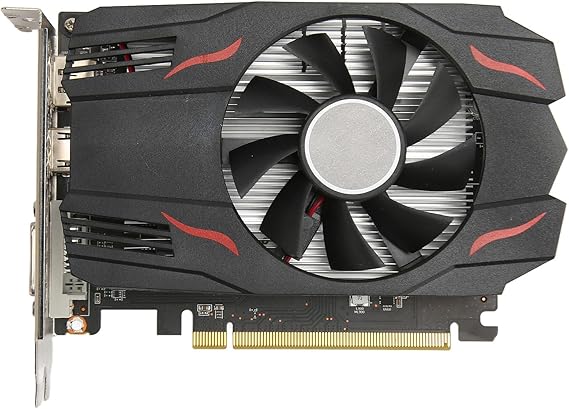 | VIEW ON AMAZON | |
| Best Compact Small | Budget Pick | VIEW ON AMAZON | |
| Best High-End | Staff Pick | VIEW ON AMAZON |
Jetson Nano Developer Kit 16G
Best Premium
SPECIFICATIONS
Brand: WayPonDEV | Ram Memory Installed Size: 4 GB | Memory Storage Capacity: 16 GB | CPU Speed: 143 GHz | Connectivity Technology: Ethernet
REASONS TO BUY
✓16GB eMMC memory for faster and more reliable boot times.
✓Flexible storage options with TF card slot and USB 3.0 for expansion.
✓Low-power design (5-10W) ideal for edge computing and robotics.
✓Supports powerful AI frameworks for image, speech, and object recognition.
✓User-friendly development environment and active community support.
REASONS TO AVOID
✗The 4GB RAM may limit performance for large-scale, complex AI tasks.
✗The eMMC storage is limited to 16GB, which may require expansion for larger projects.
The WayPonDev Jetson Nano 4GB SUB Kit is an exceptional development platform for AI enthusiasts, developers, and makers looking to explore and implement modern AI workloads.
Powered by the official Jetson Nano 4GB core module, this kit provides robust computing performance for a variety of applications such as image classification, object detection, segmentation, and speech processing. Below, we’ll dive into the features, performance, and overall value of this unique development kit.
Key Features and Design
The WayPonDev Jetson Nano 4GB SUB Kit comes with a core module that is similar to the official Jetson Nano 4GB, but with added benefits.
The standout feature of this kit is the inclusion of 16GB eMMC memory, allowing the board to boot without the need for an SD card. This built-in storage solution offers faster boot times and more reliable performance compared to traditional TF cards.
In addition to the eMMC memory, the kit also retains a TF card slot, giving users the flexibility to expand the storage. The inclusion of a USB 3.0 port further allows for the use of a USB drive to expand the storage, making this a versatile platform for various memory needs. The Jetson Nano itself features quad-core ARM Cortex-A57 CPU and 128-core Maxwell GPU, enabling the board to perform AI processing tasks efficiently while maintaining a low power consumption of just 5-10W.
Performance and Capabilities
The Jetson Nano 4GB SUB Kit provides powerful AI and machine learning capabilities. Developers can run demanding AI frameworks and models such as TensorFlow, PyTorch, and OpenCV on this affordable platform.
This makes it ideal for projects involving image recognition, object detection, speech processing, and more. The GPU acceleration and ARM Cortex-A57 CPU work in tandem to provide a smooth experience, even with complex neural networks and data processing tasks.
For those working on AI robotics or edge devices, the Jetson Nano is an ideal choice because it can be paired with cameras, sensors, and peripherals to create sophisticated applications. With support for HDMI and DisplayPort, you can easily connect it to monitors for visualization tasks.
Ease of Use and Learning
The WayPonDev Jetson Nano 4GB SUB Kit is designed to be user-friendly, making it accessible to beginners while still powerful enough for experienced developers.
The included Ubuntu-based JetPack SDK provides a robust software development environment, offering a range of pre-built libraries and tools for building AI applications.
Furthermore, the NVIDIA Jetson Community and resources make learning and troubleshooting much easier for users at any skill level.
Conclusion
The WayPonDev Jetson Nano 4GB SUB Kit offers a powerful, affordable solution for developers, learners, and makers looking to get hands-on with AI projects.
The inclusion of 16GB eMMC storage sets it apart from other Jetson Nano kits, providing faster, more stable performance without relying on a TF card.
With support for a wide range of AI frameworks, versatile storage options, and a compact design, this kit is ideal for edge AI applications, robotics, and more.
Whether you’re just starting or advancing your AI development, the Jetson Nano 4GB SUB Kit provides everything you need to get started with cutting-edge technology.
VBESTLIFE RX550 4GB Graphics Card
Best Enthusiast
SPECIFICATIONS
Graphics Coprocessor: AMD Radeon RX 550 | Brand: VBESTLIFE | Graphics Ram Size: 4 GB | GPU Clock Speed: 550 Bits | Video Output Interface: DisplayPort
REASONS TO BUY
✓4GB GDDR5 memory offers fast performance for most office and design tasks.
✓Three output ports (HDMI, DisplayPort, DVI) for multi-monitor setups.
✓1183MHz GPU clock and 6000MHz memory clock provide responsive performance.
✓Suitable for 3D CAD, CAM, and light gaming.
REASONS TO AVOID
✗128-bit memory interface limits the card for more demanding gaming or complex rendering tasks.
✗Not suitable for high-end gaming or advanced 3D rendering.
✗May need additional cooling for extended use under heavy load.
The 4GB GDDR5 128-bit Desktop Graphics Card is a reliable and budget-friendly option for users looking to enhance their computer’s graphical performance.
Built using a 14nm process with 512 stream processors, this card is designed to offer smooth multitasking and handle a variety of applications, from basic web browsing to 3D CAD and CAM work.
Whether you’re looking for a graphics solution for your office, home, or casual gaming setup, this card aims to deliver an affordable yet efficient performance.
Key Features and Design
Memory and Performance
The graphics card is equipped with 4GB of GDDR5 memory, which provides sufficient bandwidth and speed for various tasks.
With 128-bit memory architecture and a 6Gbps memory speed, the card ensures quick access to data, enhancing the overall user experience when working with demanding software or running multiple applications simultaneously.
Whether you’re into video editing, image manipulation, or handling intricate 3D designs, this memory configuration supports efficient rendering and smooth operation.
Clock Speed and GPU Power
The card offers a GPU clock speed of 1183MHz and a memory clock speed of 6000MHz, which ensures that you can run everyday tasks and medium-intensity applications without performance lag.
The high clock speeds contribute to responsive performance in tasks like web browsing, photo editing, and even entry-level gaming.
Multiple Display Support
One of the standout features of this graphics card is its ability to support up to three monitors simultaneously.
Equipped with a HDMI port, DisplayPort, and DVI port, it gives users flexibility when setting up a multi-monitor workstation for enhanced productivity or entertainment.
Whether you’re working in 3D CAD, CAM software, or want to multitask with several windows open, this card makes managing multiple displays a breeze.
It’s an excellent choice for those in fields like video editing or graphic design, where multiple screens can significantly improve workflow and efficiency.
Versatile Use Cases
This graphics card is perfect for office work, basic gaming, video editing, and graphic design. It’s also a great option for professionals using 3D CAD or CAM applications, offering the ability to handle more complex visuals without the need for a high-end, expensive graphics card.
It may not be suited for the most demanding AAA games or intensive rendering tasks, but it’s a solid choice for mid-range needs.
Conclusion
The 4GB GDDR5 128-bit Desktop Graphics Card is a reliable, budget-friendly option for users who need enhanced graphical performance for work, basic gaming, or multimedia applications. Its combination of memory speed, multiple display support, and decent clock speeds makes it an excellent choice for those in need of a solid, cost-effective solution for tasks like video editing, 3D CAD, and office productivity.
While it may not handle the most demanding applications or games, it offers exceptional value for users with moderate performance needs.
MSI Gaming GeForce GT 1030 4GB
Best Compact Small
SPECIFICATIONS
Graphics Coprocessor: NVIDIA GeForce GT 1030 | Brand: MSI | Graphics Ram Size: 4 GB | GPU Clock Speed: 1430 MHz | Video Output Interface: DisplayPort
REASONS TO BUY
✓Affordable and budget-friendly option
✓4GB GDDR4 memory for casual use
✓Suitable for light gaming and media consumption
✓Supports 4K resolution at 60Hz via HDMI 2.0b
✓Dual display outputs (DisplayPort and HDMI)
REASONS TO AVOID
✗64-bit memory interface limits performance in demanding tasks
✗GDDR4 memory is slower than GDDR5, affecting performance
The NVIDIA GeForce GT 1030 4GB GDDR4 Graphics Card is a budget-friendly yet effective option for users who need a reliable graphics solution for everyday computing tasks.
With its modest specifications, this card caters to casual gamers, home users, and those looking for a basic GPU for tasks like HD video playback, light gaming, and productivity work.
Offering 4GB of GDDR4 video memory and a boost clock of 1430 MHz, the GT 1030 provides solid performance for its price range. Let’s dive into its features, performance, and overall value.
Key Features and Specifications
NVIDIA GeForce GT 1030 Chipset
At the heart of this graphics card is the NVIDIA GeForce GT 1030 chipset, which offers a solid entry-level solution for users seeking to upgrade from integrated graphics.
While not designed for high-end gaming or demanding graphical tasks, the GT 1030 provides enough power for casual gaming and media consumption, offering smoother performance in less graphically intensive games compared to integrated solutions.
4GB GDDR4 Video Memory
Equipped with 4GB of GDDR4 memory, this card ensures enough capacity for running modern applications, HD video playback, and light gaming.
While GDDR4 isn’t as fast as newer memory technologies like GDDR5, it provides decent bandwidth for this class of GPU.
Users can expect good performance for office tasks, watching videos, and playing older or less demanding games, all without compromising the system’s responsiveness.
Boost Clock of 1430 MHz
The 1430 MHz boost clock of the GT 1030 offers a respectable clock speed for entry-level tasks. The boost clock ensures that the GPU operates efficiently when under load, maintaining smooth performance in everyday computing and light gaming.
While it won’t match the speed of more powerful cards, it provides a solid balance of performance and power efficiency for general use.
64-bit Memory Interface
The 64-bit memory interface limits the card’s memory bandwidth compared to more powerful GPUs. This means the card performs best with tasks that don’t demand a high memory throughput.
However, for the intended use cases, such as casual gaming or media consumption, the memory interface is sufficient to ensure smooth experiences without significant bottlenecks.
Connectivity and Outputs
The NVIDIA GeForce GT 1030 features a variety of useful output options for users. It includes a DisplayPort 1.4a and HDMI 2.0b ports, allowing users to connect multiple displays with high-quality video output.
The HDMI 2.0b port supports up to 4K resolution at 60Hz, making it suitable for users who need to drive high-definition displays or want to enjoy media content at higher resolutions.
The DisplayPort is also a versatile option, supporting multiple display setups and offering greater flexibility for users who need to connect monitors with different display technologies.
These output options make the GT 1030 a solid choice for those who need dual-display configurations or work with high-resolution displays for tasks like video editing or multitasking.
Performance and Use Cases
Casual Gaming
The GT 1030 is capable of running many older and less demanding games at medium to low settings. Games such as League of Legends, Minecraft, and CS:GO perform well on this card, providing a playable frame rate at 1080p resolution. However, users looking to play more modern, graphics-intensive titles may find the GT 1030 lacking, as it is not designed for high-end gaming experiences.
Media and Productivity
For users who need a GPU for HD video streaming, media editing, or office productivity tasks, the GT 1030 excels.
The 4GB of GDDR4 memory ensures smooth playback of HD video and supports video editing workflows in software like Adobe Premiere or Photoshop, though it may struggle with more complex video rendering tasks.
Conclusion
The NVIDIA GeForce GT 1030 4GB GDDR4 Graphics Card offers excellent value for users seeking a cost-effective solution for everyday tasks such as light gaming, media streaming, and office work.
While it’s not a powerhouse for high-end gaming or graphics-intensive applications, it shines in its price range for users who need a basic GPU to replace integrated graphics.
With solid 4K support, multiple output options, and a boost clock of 1430 MHz, the GT 1030 is an ideal choice for casual users and entry-level gamers.
GT 730 4GB Graphics Card
Best High-End
SPECIFICATIONS
Graphics Coprocessor: GT 730 | Brand: AISURIX | Graphics Ram Size: 4.00 | GPU Clock Speed: 902 MHz | Video Output Interface: VGA, DVI, HDMI
REASONS TO BUY
✓2GB DDR3 memory for reliable everyday performance
✓Suitable for light gaming and multimedia applications
✓Energy-efficient design, ideal for low-power systems
✓Multiple output ports (HDMI, DVI, VGA) for versatile connectivity
✓Low noise output, making it ideal for quiet PC builds
REASONS TO AVOID
✗DDR3 memory is slower compared to newer memory technologies like GDDR5
✗Not suitable for high-end gaming or resource-intensive applications
The NVIDIA GT 730 2GB DDR3 Graphics Card is a solid choice for users who need an entry-level graphics solution for their PC.
Whether you’re upgrading from integrated graphics or looking for a budget-friendly option to enhance your visual performance, the GT 730 offers a reliable and cost-effective way to boost your system’s graphical capabilities.
It is designed to handle everyday tasks, light gaming, and multimedia applications with ease, offering great value for users on a budget.
Reliable Entry-Level Graphics
The GT 730 Graphics Card is a solid entry-level solution for users who need to perform basic graphical tasks without spending much on high-end GPUs.
It features a 2GB DDR3 memory, which is ideal for everyday computing tasks such as web browsing, office work, and media consumption.
While it’s not intended for intensive gaming or graphics rendering, it can comfortably handle light gaming and multimedia applications, making it perfect for budget-conscious users who still need reliable visual performance.
DDR3 Memory for Everyday Tasks
The DDR3 memory on the GT 730 ensures smooth performance for less demanding applications, such as watching HD videos, browsing the internet, or using productivity software.
This memory type strikes a balance between affordability and performance, providing a reliable option for users who don’t need cutting-edge speeds but still want a noticeable improvement over integrated graphics.
The 2GB of VRAM is sufficient for general-purpose tasks and some light gaming, although it may struggle with higher-end games or complex applications that require faster memory.
Multimedia and Light Gaming Performance
Suitable for Multimedia Applications
One of the strongest points of the GT 730 is its ability to handle multimedia applications effectively. Whether you’re watching HD movies, editing photos, or working with presentation software, the card delivers smooth performance, providing a noticeable upgrade over onboard graphics.
It supports multiple video outputs, such as HDMI, DVI, and VGA, which makes it versatile for connecting to various displays, including older monitors or high-definition TVs.
Light Gaming
For casual gamers, the GT 730 is capable of running less graphically demanding games like League of Legends, Minecraft, or Counter-Strike: Global Offensive.
While you won’t get ultra-settings and high frame rates, the GT 730 can handle these games at low to medium settings, making it a decent option for users who want to enjoy light gaming without the need for a high-end GPU.
Energy Efficiency and Quiet Operation
The GT 730 is known for its energy efficiency, making it an ideal choice for users looking to reduce their power consumption.
It requires minimal power compared to higher-end graphics cards, which is advantageous for those building budget or low-power systems.
Additionally, the card operates with low noise, making it suitable for quiet environments or home theater PCs where minimal noise is a priority.
Connectivity and Ports
The GT 730 comes equipped with a variety of output ports, including HDMI, DVI, and VGA, offering flexibility when connecting to various monitors, TVs, or projectors.
The HDMI port supports full 1080p video output, ensuring a smooth experience for users who wish to connect their system to a high-definition display.
Additionally, the inclusion of the DVI and VGA ports ensures compatibility with older monitors and display setups.
Conclusion
The NVIDIA GT 730 2GB DDR3 Graphics Card offers an excellent value proposition for users who need a budget-friendly graphics card for basic computing, multimedia, and light gaming.
Its DDR3 memory strikes a good balance between performance and affordability, while its multiple output ports ensure compatibility with various displays.
While it’s not designed for gaming enthusiasts or professionals working with demanding graphical tasks, it serves as a reliable solution for entry-level users looking to enhance their computer’s visual performance.
For anyone seeking a low-cost, efficient option to replace integrated graphics or enhance their home theater setup, the GT 730 is a solid choice.

CEO
Hi, My name is Bilal Ali and I am an affiliate marketer and have been involved in this field for a number of years. I have a lot of experience and knowledge in this area, which I love to share with others. I am always looking for new ways to improve my skills and learn more about affiliate marketing. I am also very active on social media, and love to connect with others in the industry.


